 TeamRally
Team Building Activities for Hybrid Teams That Actually Work
Team building activities for hybrid teams of 20–150 people — formats that work when half the room is remote, with sizing, timing, and facilitation notes.
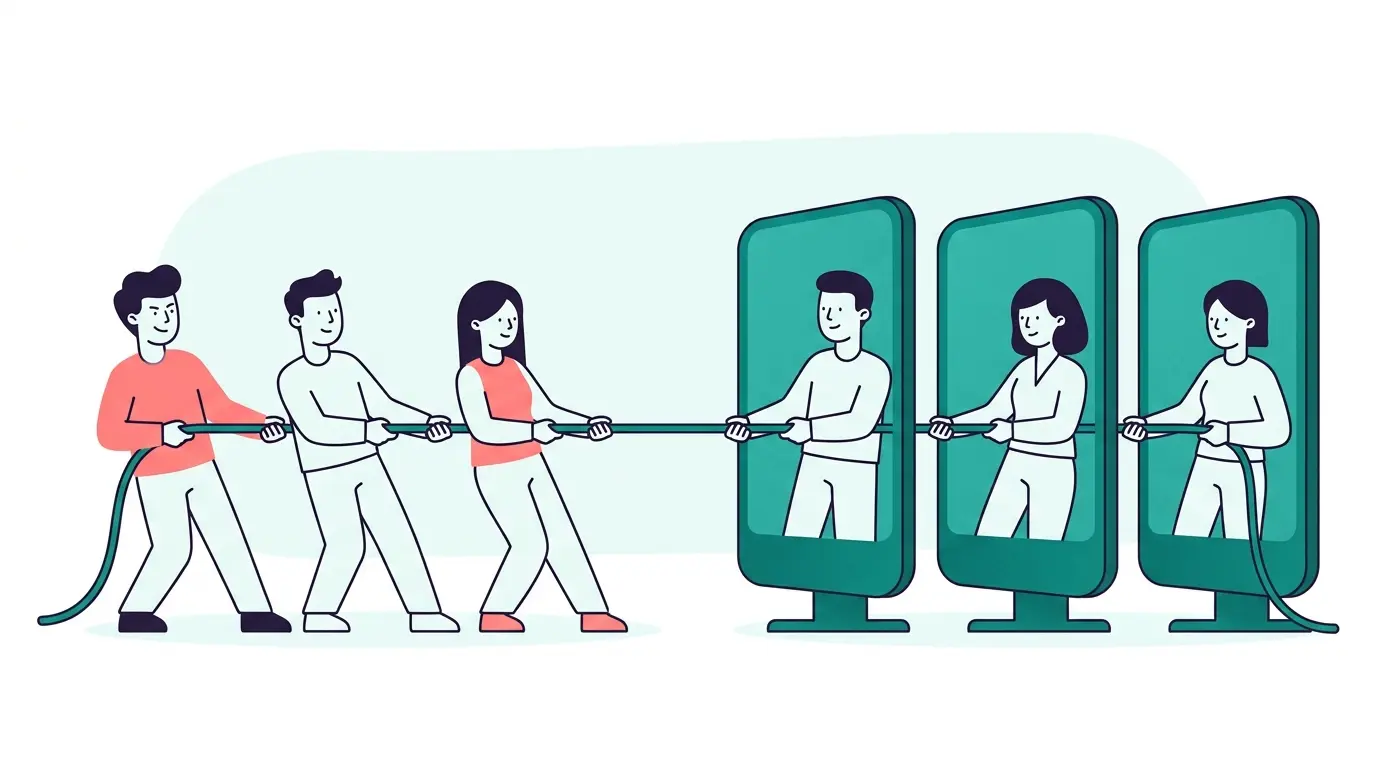
Team building activities for hybrid teams have a structural problem most planners discover the hard way: anything designed for a room excludes the remote half, and anything designed for video bores the in-person half. The classic failure is the office crowd laughing around a table while six remote faces watch on a propped-up laptop, slowly disengaging. The activities that actually work share three traits — structured turns, mixed teams, and no dependence on physical proximity — and once you internalize the filter, the specific games matter less than fitting it.
The selection criteria
Before the list, the filter. An activity works hybrid if:
- Remote and in-person people compete or collaborate as equals. If being in the room confers an advantage — hearing side conversations, seeing the board, grabbing the marker — remote people check out within minutes, and correctly so. The activity has to be played on a surface everyone reaches equally, which usually means a shared screen or doc rather than a physical space.
- Participation is structured, not voluntary. “Anyone want to share?” reliably selects for the same three extroverts and leaves everyone else watching. Rounds, turns, and assigned roles select for everyone. This isn’t just fairness — loneliness is a top-cited remote struggle in Buffer’s State of Remote Work, and an activity that only the confident engage with widens the gap it was meant to close.
- It scales by splitting, not by growing. Five teams of six beats one group of thirty, every time, because thirty people can’t have a conversation and six can. Scale by adding parallel small groups, never by making one group bigger.
Activities that pass the filter
Trivia with mixed squads. The workhorse. Mix remote and office people on every team and force collaboration through a shared doc or channel so the office team can’t just shout answers across the table. 45–60 minutes, with a running scoreboard to keep momentum.
Online escape rooms. Genuinely level: everyone works from the same browser, so the office has no advantage. Best at 4–6 per room, with multiple rooms running in parallel for bigger groups and a shared leaderboard at the end.
The “two truths” tournament. Bracket-style, two people per round, everyone votes via poll. Structured, fast, and surprisingly revealing — you learn more about a colleague in their three statements than in a month of standups. Works to about 40 people before the bracket drags.
Show-and-tell rounds. One object from your desk or home, 60 seconds each, in breakout groups of five. Zero prep, high connection-per-minute, and introvert-safe because the turn is bounded and everyone knows exactly when theirs comes and ends.
Asynchronous challenges. Photo scavenger hunts or step-count competitions that run over a week in Slack or Basecamp instead of in a call. No scheduling at all — and often the highest-participation format for global teams, because the entry barrier is one message rather than a held hour that’s the middle of someone’s night.
What to skip
Icebreakers requiring physical movement (the remote half can’t), anything where remote people “watch” the office have fun, and unstructured “virtual happy hours” past about 15 people. If your activity’s entire plan is “people will just talk,” it isn’t a plan — it’s a hope, and at scale that hope reliably produces the same dozen talkers and a silent majority.
Facilitation notes that matter more than the game
- Brief the in-person room explicitly: no side conversations, everything in the shared channel, cameras and mics treated as the primary stage. The office’s job is to not form a private second event.
- Pre-assign squads mixing tenure, team, and location — don’t let people self-select into who they already know, and don’t randomize so blindly that the newest person ends up alone among strangers.
- Have a clear return signal from breakouts so parallel groups snap back together cleanly instead of trickling.
Make it repeatable
The teams that do this well don’t generate new ideas every quarter — they maintain a small library, rate what they run, and repeat the winners. Novelty is overrated; reliability and a known format people trust beat a fresh-but-untested idea most of the time. The annual culture calendar gives the rotation a schedule so it happens on purpose.
This article is part of our complete guide to planning company events for remote and hybrid teams. For recurring, lower-effort connection between events, see remote team bonding activities that scale.
The activity is the easy part — getting everyone to RSVP and show up is the grind. TeamRally puts the invite where your team already is and keeps the headcount live. Start free.