 TeamRally
Employee Happiness: What Actually Moves It, and What Just Moves the Score
How employee happiness is measured, why the number is easier to move than the thing it measures, and what actually builds it — recognition, belonging, and specificity.
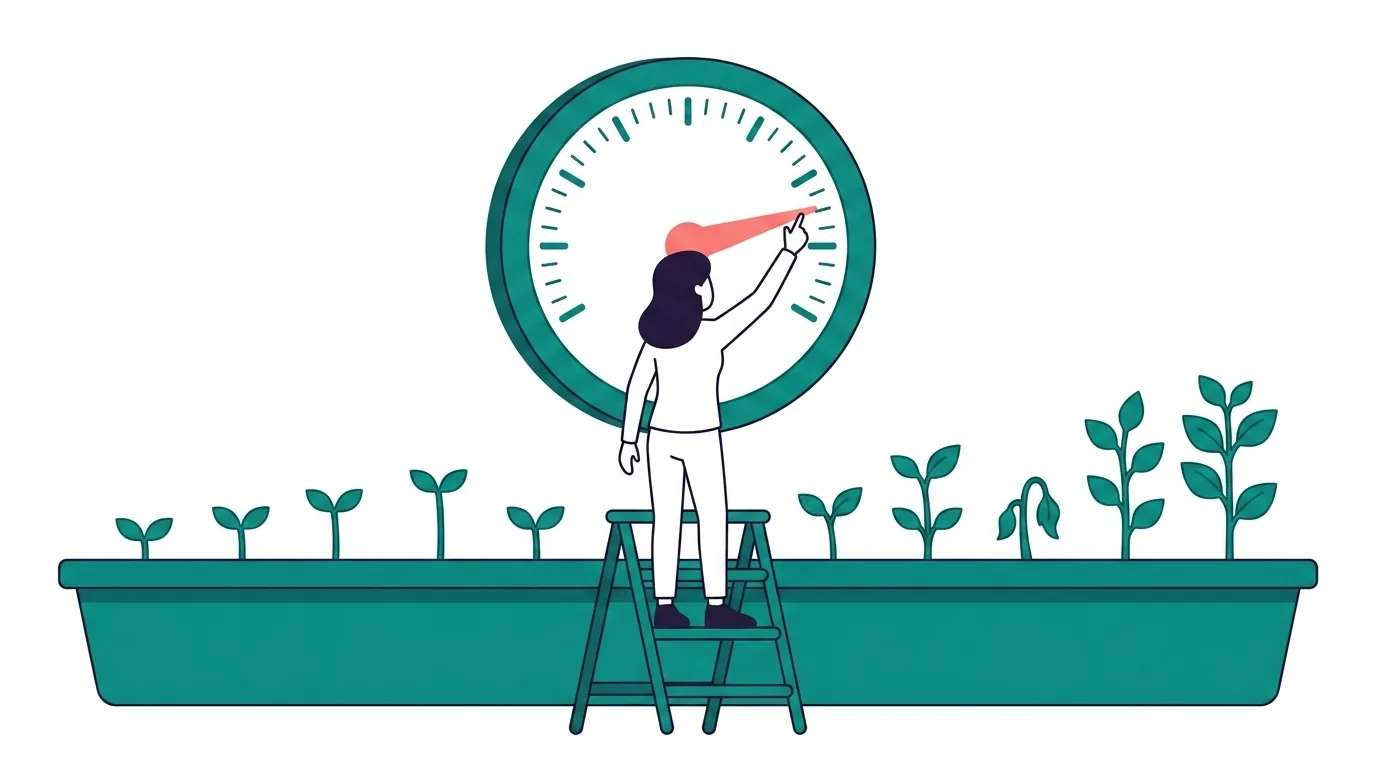
Most people who go looking for “employee happiness” are really looking for a number. Something to put in a board deck, or a benchmark to check against last quarter. That instinct is reasonable, and this guide starts there, honestly: here is how happiness at work actually gets measured, what each instrument tells you, and what it costs.
Then comes the harder part, which is that the number is significantly easier to move than the thing it’s supposed to represent. That gap is where most happiness programs quietly go wrong. Not because measurement is bad — you should measure — but because a score responds to whatever happened recently and loudly, and the things that actually make work feel good accumulate slowly and quietly and don’t announce themselves on a dashboard.
How employee happiness actually gets measured
There are three instruments in common use, and they answer different questions. Most teams run one of them, call it “measuring happiness,” and inherit its blind spots without noticing.
eNPS
Employee Net Promoter Score adapts Reichheld’s customer NPS to staff: how likely are you to recommend working here, 0–10? Promoters (9–10) minus detractors (0–6), reported as a number between -100 and +100.
What it’s good for: it’s one question, so response rates stay high, and it trends cleanly over long periods. As a smoke alarm it works — a sharp drop is real information.
What it costs you: it’s a single scalar standing in for an enormously complex judgment, and the recommend-to-a-friend framing measures something closer to employer-brand pride than daily experience. Someone can find their actual working days tedious and still score a 9 because the company looks good on a CV. The reverse also happens. And the 0–6 detractor band lumps a genuinely miserable 2 in with an ambivalent 6, which is most of your workforce most of the time.
Engagement surveys
The long-form quarterly or annual instrument — 30 to 60 Likert items across autonomy, manager quality, clarity, growth, recognition, belonging. Gallup’s Q12 is the canonical short version and, unusually, it was built by working backwards from outcomes rather than from theory about what ought to matter.
What it’s good for: genuine diagnostic power. Unlike eNPS it tells you which part is broken, and item-level movement is actionable in a way a composite never is.
What it costs you: length is a tax on respondents, and it’s charged quarterly. Worse, the gap between survey and action is usually months, and people notice. A team that has answered the same 45 questions three times without visible consequence learns something specific — that the survey is a ritual, not a channel — and their answers get less honest as a result. The instrument degrades through use.
Pulse surveys and mood check-ins
Short and frequent: one to five questions weekly or fortnightly, sometimes as little as a single emoji-scale mood tap.
What it’s good for: speed. You see a dip in the week it happens rather than the quarter after, which makes it genuinely useful around discrete events — a reorg, a launch, an offsite.
What it costs you: frequency drives fatigue faster than anyone expects, and high-frequency mood data is dominated by noise. Someone’s Tuesday is affected by their commute, their sleep, and a rude email far more than by anything structural. Aggregate enough of it and you mostly get a graph of the weather. Frequent instruments also encourage a specific bad habit — reacting to every fluctuation as though it were signal.
The thing all three share
Each of these asks people to compress a working life into a scale, in the abstract, on a schedule set by someone else. That’s a real constraint, not a nitpick, and it produces one specific blind spot: these instruments are good at detecting when something is wrong, and bad at telling you what would make things better.
A dip tells you to go look. It doesn’t tell you what to build. Teams that treat the survey as the whole program end up in a loop of measuring a problem with increasing precision and never doing the thing that would resolve it. If you want the format that avoids most of this, it’s narrow and event-scoped rather than broad and periodic — two questions, 48 hours, and a visible action loop, asked about a specific thing while people still remember it.
Why the number moves
Here is the uncomfortable part. Scores are movable, and the cheapest ways to move them are the ones with the shortest half-life.
Perks are hygiene, not motivation. Herzberg’s two-factor theory has held up remarkably well for something proposed in the 1950s: the factors that cause dissatisfaction when absent are largely not the factors that create satisfaction when present. Pay, benefits, working conditions, and policy are hygiene — get them wrong and people are unhappy; get them right and people are simply not unhappy, which is a different state from happy. Recognition, achievement, meaningful work, and growth are the other category, and they’re the ones that actually generate the positive end of the scale. This is why the free lunch worked for a month. It was never in the category of thing that produces satisfaction. It was in the category of thing whose absence produces complaints.
Hedonic adaptation eats improvements. People adapt to stable positive changes with startling speed — the hedonic treadmill, in Brickman and Campbell’s framing. The new office, the extra day off, the upgraded laptops: each produces a genuine bump and each becomes the baseline. Anything you can do once and then stop thinking about will be absorbed into normal within a quarter or two.
Recency dominates. Ask someone in the abstract how happy they are at work and they will, without meaning to, answer with the most available evidence — this month, this week, the meeting that went badly on Thursday. A survey run three weeks after a good offsite and one run three weeks after a layoff are measuring the same underlying reality with wildly different results.
And then there’s Goodhart’s law. When a measure becomes a target, it ceases to be a good measure. Once a happiness or engagement score is attached to a manager’s performance review, you have not created an incentive to make the team happier. You’ve created an incentive to make the score higher, and those two things overlap far less than anyone would like. The failure modes are predictable and universal: surveys announced in advance with encouraging framing, timing chosen around good news, gentle pressure on teams to “be constructive,” a quiet culture of not being the person who tanks the department’s number. None of this is unusual and none of it requires bad faith. It’s just what happens to metrics under pressure.
What the research actually points at
Strip away the instruments and the picture underneath is fairly consistent, and it is not primarily about perks.
Relatedness is a base need, not a nice-to-have. Deci and Ryan’s self-determination theory identifies three psychological needs underlying intrinsic motivation: autonomy, competence, and relatedness. That third one — feeling connected to and cared about by the people around you — is the one most workplace programs treat as optional garnish. It isn’t. It sits at the same level as having control over your work and being good at it.
Gallup’s Q12 contains two items that most companies quietly skip. One is “In the last seven days, I have received recognition or praise for doing good work.” Note the window: seven days, not this quarter, not at your review. The other is “I have a best friend at work” — the item that gets the most eye-rolling from executives and has some of the most durable relationship to outcomes. Both are measuring the same underlying thing, which is whether you exist as a person to the people you work with.
Recognition is one of the most fixable gaps there is. Gallup and Workhuman’s research found that only about one in four employees strongly agree they receive the right amount of recognition, and estimated that strategic recognition could prevent a substantial share of voluntary turnover. The gap is large, and unlike compensation, closing it isn’t primarily a budget question.
Remote work removed the accidental version of all this. In an office, a certain amount of relatedness accrues without anyone planning it — the hallway, the kitchen, the cake someone brought in. Remove that and nothing replaces it by default; Buffer’s State of Remote Work has found loneliness among the top struggles remote workers name, and Microsoft’s Work Trend Index found hybrid and remote employees reporting fewer close work friendships than before. That’s the infrastructure problem underneath a lot of what gets labelled a happiness problem.
The part that matters: measurement is downstream
Put the two halves together and the conclusion is fairly blunt.
Every instrument above is asking, in one form or another, do you feel valued and connected here? And the honest answer is assembled from very specific evidence: whether anyone noticed you were carrying something hard, whether your five-year anniversary was marked or slid past, whether the person who left got a proper send-off or a calendar invite that just stopped appearing. People don’t compute a sentiment score. They remember a handful of concrete moments and answer from those.
Which means the score is a lagging indicator of something you build somewhere else entirely. Engagement platforms measure how your team feels. The moments are the reason there’s something worth measuring.
This is our own position and worth being explicit about: we don’t produce a happiness score and we’re not planning to. Not because measurement is worthless — run a pulse, it’s genuinely useful — but because the score was never the scarce resource. The scarce resource is twenty colleagues actually writing something real when someone hits a milestone, and no dashboard produces that.
What to actually do
Practical, in rough order of return.
Fix hygiene first, and stop expecting it to delight. If pay is under market, the tooling is broken, or someone is managed by a person who shouldn’t manage people, nothing in this section will register. Herzberg’s point cuts both ways: hygiene won’t make people happy, but its absence reliably makes them miserable, and it will swamp everything else you try. Fix it, then stop treating it as your happiness program.
Make recognition specific, and let it come from peers. “Great work this quarter” is noise. “The way you rewrote that onboarding doc saved me a full day, and three other people have said the same” is signal, because it demonstrates that someone was paying attention. Manager-issued points and leaderboards mostly fail here — they convert recognition into currency, and once it’s currency people can tell roughly what it’s worth, which is not much. Peer-authored, specific, unprompted is the version that lands. A fixed slot in an all-hands agenda is the cheapest reliable place to put it.
Celebrate things that are actually true. Birthdays, work anniversaries, someone’s kid being born, a farewell for a person who mattered. These work not because they’re clever but because they’re real — the person knows the date is genuine and the attention is warranted, which is exactly what a manufactured fun event can never claim. The mechanics: birthdays remotely, work anniversaries, and milestone tracking so the dates don’t depend on one person’s memory.
Prefer cadence over intensity. One genuinely good offsite a year plus a reliable weekly rhythm beats four heavily produced quarterly events with nothing in between. The Q12 recognition item asks about the last seven days for a reason — frequency is doing more work here than production value. Spikes decay; the floor is what people actually live on.
Let something else hold the calendar, and nothing else. The one part of this that genuinely should be software’s job is remembering which dates are coming. That’s arithmetic. What must stay human is the content — the words people write, which are the entire payload. Automate the arithmetic; never automate the sentiment. The moment a system generates the message on someone’s behalf, the recipient can tell, and you have manufactured the exact hollowness you were trying to avoid.
Close the loop visibly. If you run a survey, publish what you heard and what changed, by name. One visible change does more for the next response rate than any amount of encouragement to participate.
What none of this fixes
Worth stating plainly, because happiness content tends to oversell.
This will not fix underpayment. The relationship between income and wellbeing is more complicated than the popular “money stops mattering past $75k” summary suggests — Killingsworth’s later work, and the 2023 adversarial collaboration he ran with Kahneman and Mellers, found that for most people wellbeing continues rising with income, with an unhappy minority for whom it plateaus. Either way, if someone is worried about rent, celebration is not the intervention.
It will not fix a bad manager. Manager quality dominates most engagement data, and it is not offset by a strong ritual layer. Neither will it fix chronically unclear work, an unsustainable workload, or a strategy nobody believes. If people are exhausted and confused, a card is not the missing piece and may read as insulting.
Celebration is what you build on top of a functional situation. It’s not a substitute for one, and treating it as a patch over structural problems is both ineffective and fairly transparent to everyone involved.
Common questions
How do you measure employee happiness? Pick one instrument and run it consistently: eNPS for a cheap long-run trend, a full engagement survey annually for diagnosis, a short pulse around specific events. Consistency matters more than the choice. Then treat the result as a signal to investigate, not a target to hit. The full breakdown is here.
What’s a good eNPS? Benchmarks vary enough by industry, geography and company stage that the absolute number is close to meaningless. Your own trend line is the useful reading — and a sudden drop is worth far more attention than a middling steady score.
How often should we survey? Annually for the long instrument, plus short event-scoped pulses when there’s something specific to learn. Quarterly full surveys are where most fatigue comes from, and the marginal information over annual is smaller than the cost in goodwill.
Does employee happiness increase productivity? The link is real but weaker, noisier and more bidirectional than the popular statistics suggest — and productivity is a poor reason to do this anyway. The honest version of that research is here.
Do perks work? As hygiene, yes — their absence causes real complaints. As a source of durable satisfaction, no. Expect a bump that decays to baseline within a quarter, and don’t build the program on them.
What about remote teams specifically? Everything above holds, but the accidental layer that used to produce relatedness for free is gone and has to be rebuilt deliberately. Practical formats here.
No scores, no leaderboards, no dashboards rating human beings — just the moments people actually remember, in one place. TeamRally runs your team’s celebrations and events. Free up to 15 people — start free.