 TeamRally
Employee Engagement Ideas for Remote Teams That Survive Contact With a Calendar
Remote employee engagement activities sorted by what they actually cost to run — async formats, low-coordination rituals, and the few synchronous events worth the scheduling.
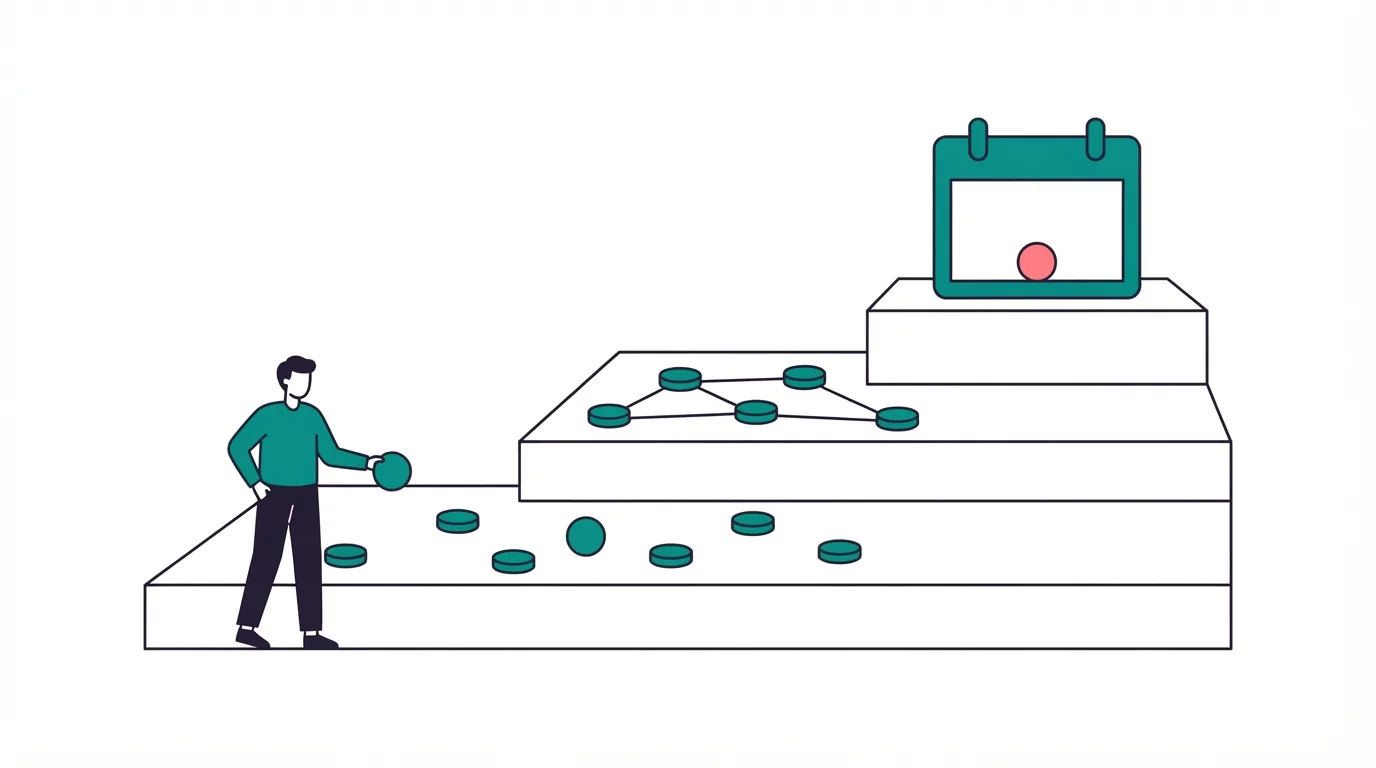
Most lists of remote engagement activities are sorted by novelty. That’s the wrong axis. The reason a remote ritual dies is almost never that it wasn’t fun enough — it’s that it cost more to coordinate than anyone had, or it depended on one person remembering, or attendance was quietly compulsory and everyone could tell.
So this list is sorted by coordination cost, from things that require no shared calendar time at all to the handful of synchronous events that genuinely earn their scheduling. Within each tier, the formats are ones that hold up past the third repetition, which is where most of them fall over.
Why remote engagement ideas die
Three failure modes, and nearly everything on a typical list hits at least one.
The scheduling tax. A format requiring six people across four timezones to be free simultaneously has a real recurring cost, and it’s paid by whoever organises. Past about three timezones, synchronous-by-default is a slow death sentence — not because people don’t want to come, but because finding the slot gets harder every month until someone stops trying.
Mandatory fun. The moment attendance is tracked, or a manager notices out loud who didn’t show, the activity stops being a break and becomes an unpaid obligation with a party hat on it. People are extremely good at detecting this. It converts a positive into a resentment, which is worse than having done nothing.
The single-human dependency. Almost every remote culture ritual lives in one person’s head. They get busy, or they leave, and three months later someone says “we used to do that.” The ritual wasn’t bad. It just had no owner beyond its founder, which is a structural problem rather than a motivation one.
Everything below is chosen to dodge at least two of the three.
Tier 1: zero-schedule (nobody has to be anywhere)
These run in a channel, on people’s own time, and cost approximately nothing to sustain. This is where the highest return per unit of effort lives, and it’s the tier most lists skip because it doesn’t photograph well.
A recurring photo prompt. One prompt a week in a dedicated channel — your desk setup, what you had for lunch, the view out your window, your worst hold-music experience. The bar to participate is one message, which is the entire point. It works because it surfaces the mundane texture of people’s lives that an office supplies for free and remote work removes entirely.
A “what I’m stuck on” thread. Slightly braver and considerably more valuable. A weekly thread where people post one thing they’re wrestling with, technical or otherwise. It normalises visible difficulty, which is a real cultural asset, and it routinely produces help nobody would have thought to ask for directly. Seed it yourself for the first month, and post genuine problems, not decorative ones.
Interest channels with a low bar to existing. Let people start #running, #bread, #terrible-films without a governance process. Most will go quiet. The two or three that don’t will carry more genuine connection than any organised event, because they’re built on something people actually care about rather than on shared employment.
An async show-and-tell. A monthly thread where anyone posts something they made, work or not — a feature, a shelf, a photo, a spreadsheet they’re unreasonably proud of. Written and asynchronous means the people who’d never speak up on a call participate, and in practice they’re a meaningful fraction of any team.
A shared playlist. Trivial, nearly free, and unusually durable — it accumulates rather than needing to be re-run, and it quietly tells people something about each other.
Tier 2: low-coordination recurring
These need a slot, but a small and forgiving one.
Rotating pairs for a short call. Two people, fifteen minutes, no agenda, rotating every fortnight. This is the single highest-yield format in remote work and it maps directly onto the thing that’s actually missing — Gallup’s Q12 includes “I have a best friend at work” for good reason, and pairs are how those form when there’s no hallway. Fifteen minutes and no agenda are both load-bearing; a thirty-minute slot with a suggested topic gets declined. If you’re evaluating tooling for this, the tradeoffs are here.
A recognition slot in the all-hands. Five fixed minutes where people call out specific work by specific colleagues. Fixed and predictable is the feature — people start noticing each other’s wins because there’s a reliable place to put them. Specificity is what separates this from noise: “the way you rewrote the onboarding doc saved me a day” lands, “great work this quarter” does not. Format details in the all-hands agenda.
Optional coworking rooms. A standing open video room during overlap hours, cameras optional, no obligation to talk. Low-grade ambient company for the people who miss it, and completely ignorable for the people who don’t. The two-track design is what makes it survive.
Demo Friday, kept short. Thirty minutes, anyone can show something in progress, works-in-progress explicitly welcome. The failure mode is letting it become a polished presentation slot — once it does, the barrier to showing something rises and only the confident participate.
Tier 3: worth the schedule
Real synchronous events, run a few times a year, where the scheduling cost is justified.
A quarterly team session with actual structure. Structure is the operative word — an hour of unstructured video call is not an event, it’s a meeting nobody prepared for. Formats that work across hybrid attendance matter here, particularly the rule that in-person and remote participants need equal footing rather than a room with a laptop pointed at it.
Themed celebrations with a budget. Genuinely fun, and cheaper than people assume — under €15 a head is workable if you spend on the right things.
The annual in-person gathering. The biggest line item and worth it, provided you understand what you’re buying: in-person time rebuilds bonds that then have to be maintained by the steady layer underneath. Fly everyone somewhere once a year and do nothing else and you’ve bought a great week followed by a slow decay. The offsite playbook covers the mechanics, and why most formats break past twenty people covers the sizing.
The one that outperforms all of it
If you only run one thing, run this: mark the things that are actually true about people’s lives. Birthdays, work anniversaries, a new baby, a proper send-off for someone leaving.
These beat every invented activity on the list, and the reason is structural rather than clever. Manufactured fun has to overcome an obvious objection — this exists because someone decided we should bond today. A birthday doesn’t. The date is real, the attention is warranted, and nobody has to pretend the occasion is anything other than what it is. That’s a foundation none of the other formats get to start from.
Two things determine whether it lands. Specificity, because a wall of “Happy birthday!” is worse than three colleagues writing something that could only be about that person. And consistency, because a missed one is genuinely damaging — it reads as “the company forgot me,” and that single data point recalibrates how someone reads every other gesture you make. Half-remembered celebrations are worse than a policy of none.
Which is where the failure mode from the top of this article bites hardest, since this ritual is the one most likely to live in a single person’s memory. The dates should sit somewhere durable, and the calendar arithmetic should be handled by something that doesn’t get busy or leave — that part is genuinely software’s job. What must stay human is the content. The moment the system writes the message on your behalf, the recipient can tell, and you’ve built the exact hollowness you were trying to avoid. Mechanics: birthdays remotely, work anniversaries, and milestone tracking.
Make it survive its owner
Whatever you pick, do these three things or expect it to be gone within a year.
- Write down the cadence and the owner. A ritual you can’t hand over in a one-page doc ends when its owner does.
- Put the underlying data somewhere shared. Dates and preferences in a durable store, not a personal spreadsheet that leaves with the person.
- Name a second person. Not a committee — one named backup who runs it when the owner is away. This single step prevents more quiet deaths than anything else on the list.
What to skip
Points, badges and leaderboards. They convert recognition into currency, and once it’s currency everyone works out roughly what it’s worth, which is not much.
Anything with tracked attendance. See mandatory fun, above.
Icebreakers that require personal disclosure. “Share an embarrassing story” is fine among people who already trust each other and actively unpleasant among people who don’t — which is precisely the group you were trying to help.
More than about two recurring rituals at a time. Engagement calendars fail from bloat far more often than from thinness. Two things that reliably happen beat six that happen sporadically, every time.
If you want the argument underneath all of this — why recognition and belonging move the needle and perks reliably don’t — it’s here.
No scores, no leaderboards, no mandatory fun. TeamRally runs your team’s celebrations and events in one place, so the dates don’t live in one person’s head. Free up to 15 people — start free.